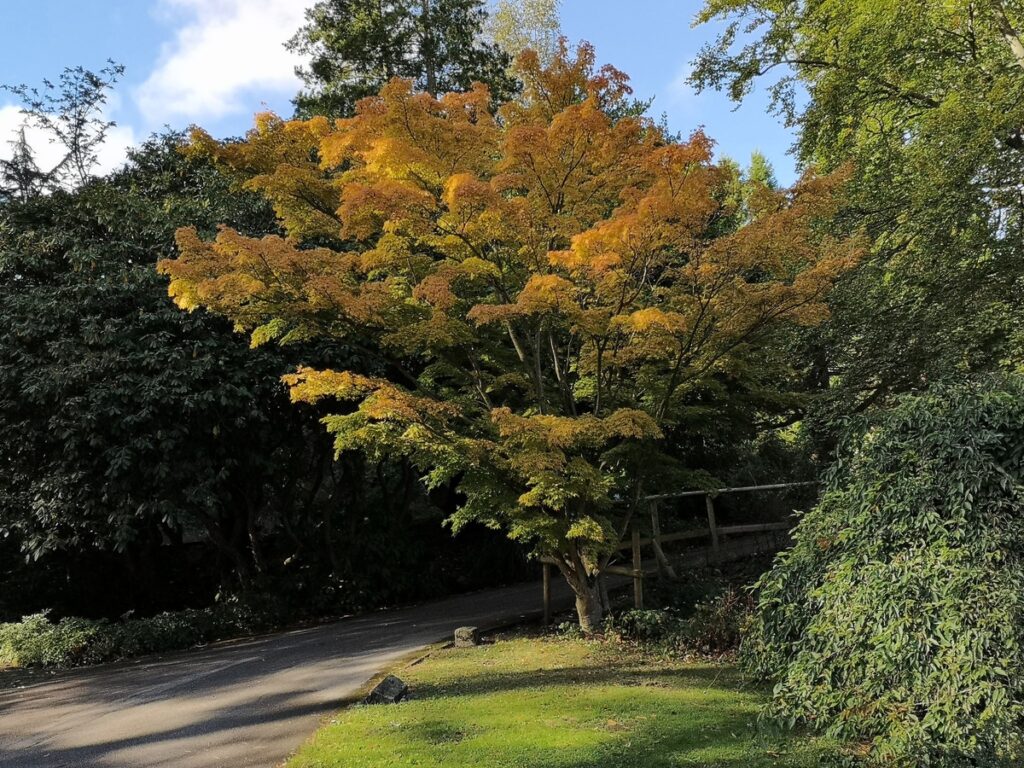
There are many explanations for maple’s stunning colour change in autumn. As dormancy begins there is a decrease in chlorophyll. When the green chlorophyll in leaves diminishes, the yellow pigments that already exist become dominant and give their color to the leaves. Red autumn leaves, however, result from a red pigment, anthocyanin, created by the tree. For many years, researchers have wondered why a tree would expend energy to make anthocyanin in its leaves when it’s about to shed them. As red leaves tend to remain on branches longer than yellow and orange ones, some biologists believe they provide protection from frost and provide more sugars and nitrogen to the tree before they fall off. Another theory suggests that anthocyanin from the fallen leaves gets absorbed into the soil around the base of the tree, protecting the tree while it’s dormant and preventing competing plants from taking root.
Many classic artworks and poems are about the maple tree or the falling maple leaves. In the aesthetic theme wabi-sabi (beauty in flawed nature), their ephemeral nature reflects subtle moods of imperfection, impermanence and incompletion. Here is on example.
Haiku by Ryokan Shonin (1758-1831)
Showing front,
Showing back,
Maple leaves fall.
The Edo period artist Hokusai’s (1760-1849) breathtaking prints, maple leaves floating in a river represent humans “going with the flow”, leaves stuck in a ditch may represent people being stuck in life.
Things to do with Japanese Maple:
● Trace round their delicate, pretty leaves and make leaf bunting.
● In autumn and winter test out their considerable genetic variation. Colle ct seeds, pot them up outside in the cold and see what germinates. (Most of the Japanese maple trees you see in garden centres are the result of grafting, where the chosen variety isjoined with a seedling grown rootstock so they can continue to grow together.)
● Grow a maple from seed and keep it small. Learn about the art of bonsai, or growing miniature trees.
● Write a haiku (5-7-5 syllables, no rhyme, seasonal). Could be a large idea made small, an emotion or something that happened.
● Make maple leaf tempura – In Minoh, near Osaka, fried autumn maple leaves in batter are a popular snack on sale to tourists coming to view the glorious kōyō (紅葉/ “red leaves”). Chefs in Minoh usually store their leaves in barrels of salt for one year, which makes them particularly tasty.